
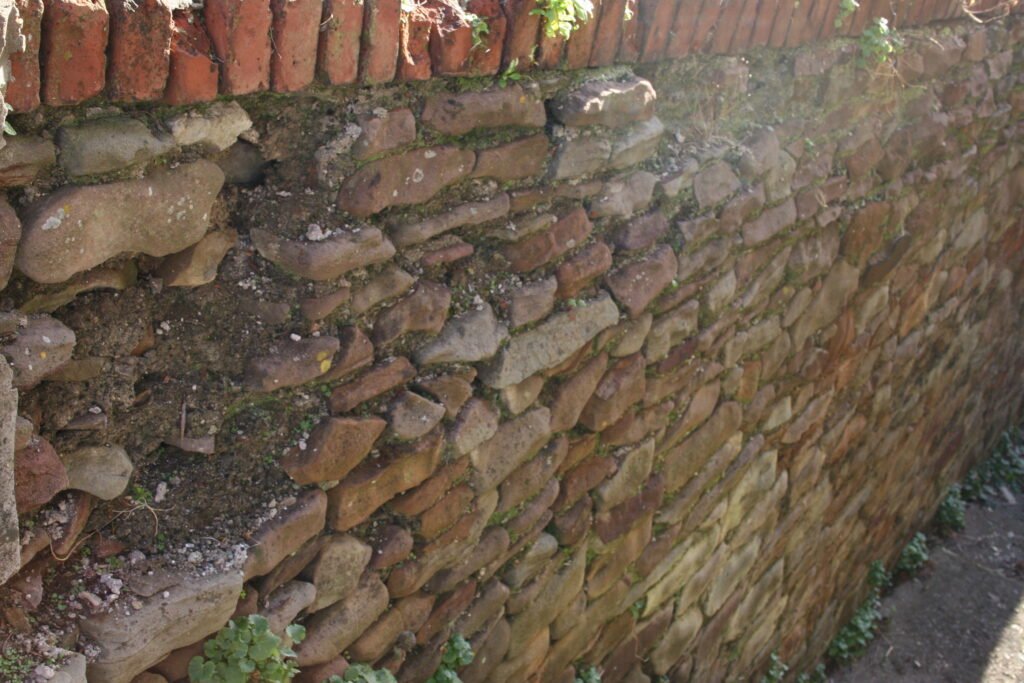
A masterfully laid 200 year old wall bordering a listed building, falling apart from the top and in desperate need of repair.
This wall was built around 1820 and had stood the test of time to still be standing completely upright.
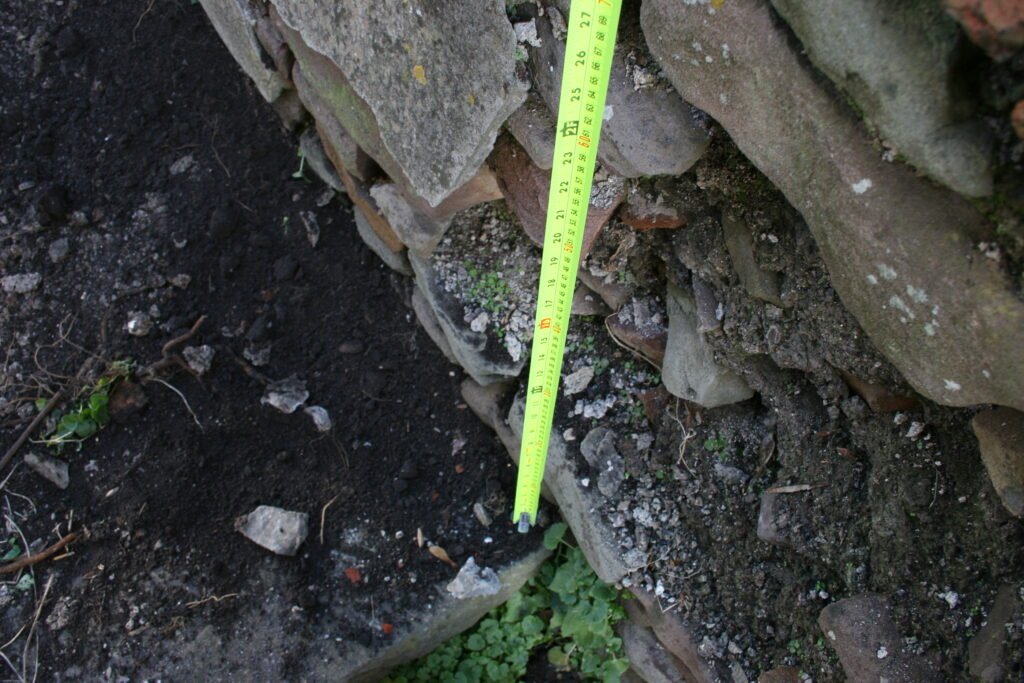
The mortar however had weathered to its limit. The coping course of bricks were loose and water ingress was blowing out stones during freeze thaw cycles. Invasive plants had set root in the moist crumbling mortar compounding the slow dismantling of this historic, masterfully crafted, rubble stone wall.



The Brief
To restore and repoint the wall using lime mortar.. We aimed to preserve as much historical value as possible, including some of the original jointing at lower levels, which remained structurally sound due to its sheltered location and distance from the top where the water gets in.
‘Breathable’ Lime Mortar
Lime mortar is the ideal choice for restoring any internal or external historic walls, as they were originally constructed using this binder for the mortar. Lime mortar is more vapour permeable than Portland cement and has higher elasticity and flexibility which helps with expansion and contractions that occurs with ground conditions and seasons.
Lime mortar sets more slowly in cold weather, increasing the risk of frost damage due to its high moisture content and comparatively low strength developed, which cannot resist the expansive force of ice. This is in a large way determined by the type of lime and how much of a quicker chemical set takes place due to its hydraulic-non hydraulic nature. For this reason lime working season is typically between spring and autumn for greater ease.
Dismantling
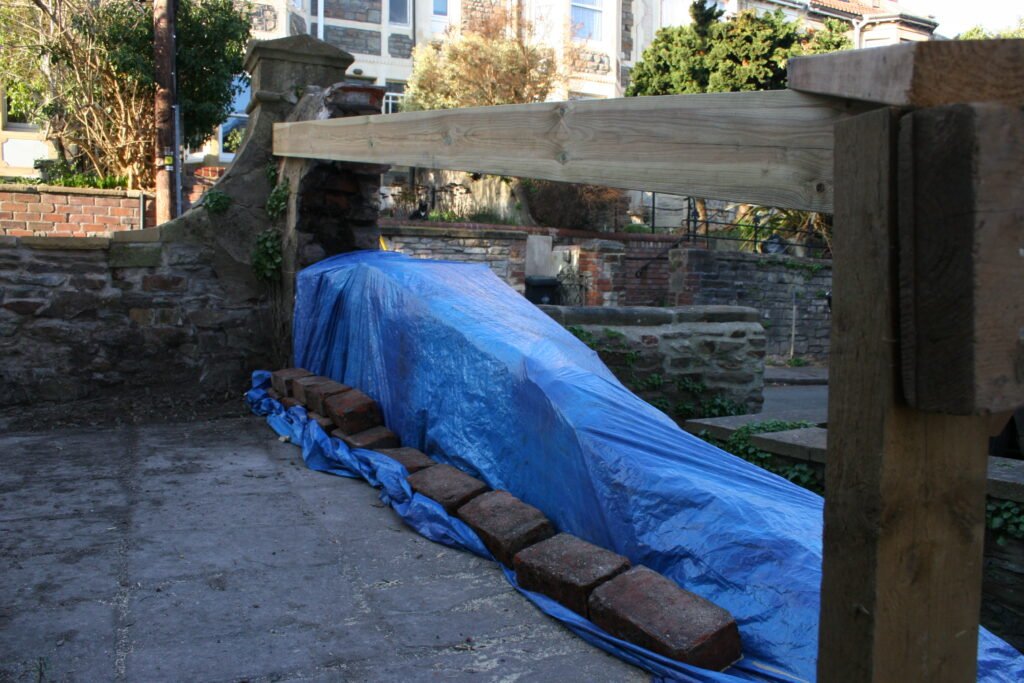
The highest point of the wall was in danger of collapse into the walkway below on the other side where steps lead down to a neighbours side alleyway. Stones on their side were already falling into the passage. For safety the dangerous sections were carefully dismantled and the open core of the wall protected from the elements in winter time until warmer weather arrived.


The Finished Wall
A 1:3 mix was used comprising of NHL 3.5 Lime to a mix of a locally sourced well graded grit sand, a fine sharp sand and an even finer sharp ginger sand to give the mortar a slight peach colouration which contrasts well to the subtle green-blue tones of some of the pennant sandstone. The colouration radiates on a bright day illuminated by the diffused light between the properties.

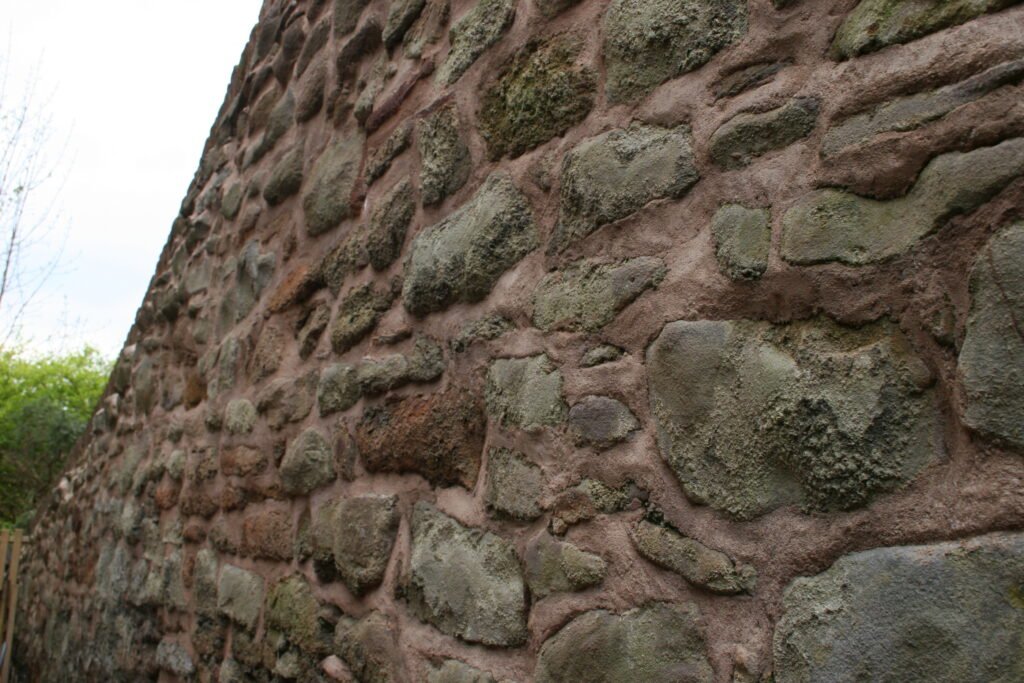
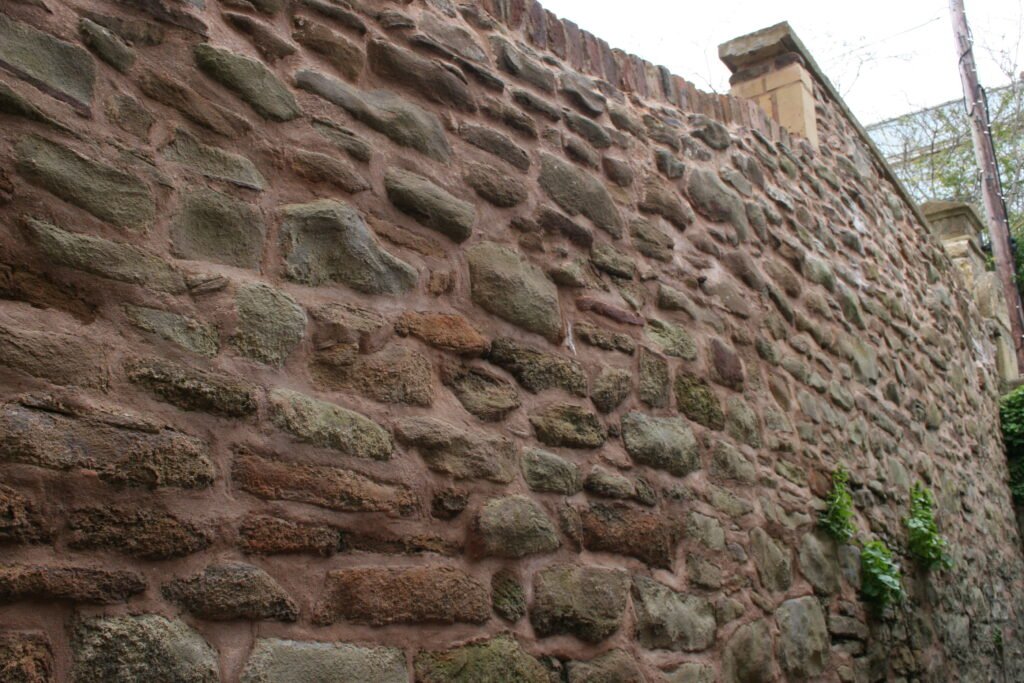
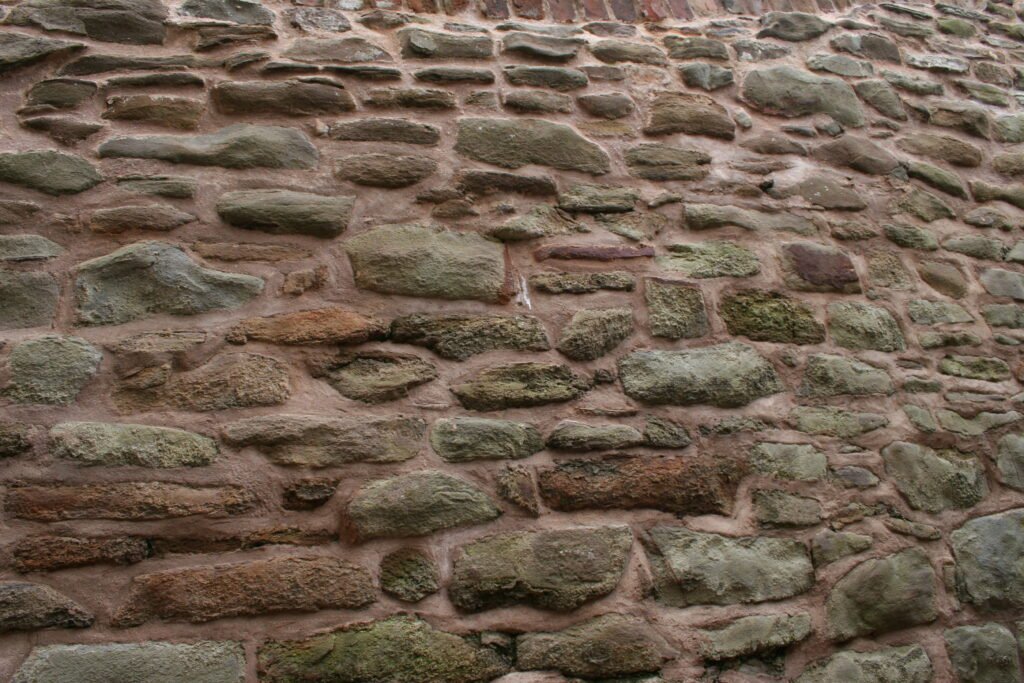
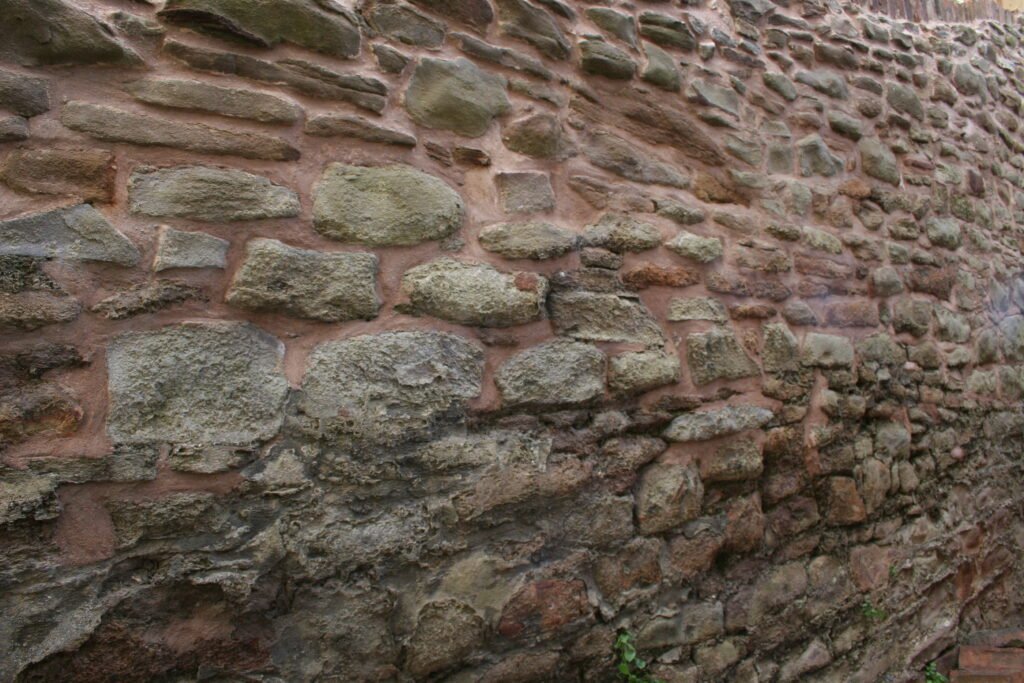

The finished restoration from the other side


The traditional brick coping of the local area was lovingly restored with a gentle meandering curve following the height changes in the passages below.


The entire raised wall section at the top was rebuilt in the same profile as before with the traditional bath stone copings cleaned up and re-laid.
Its nice to save a historic wall from crumbling. The client was amazed by the transformation of the wall.
